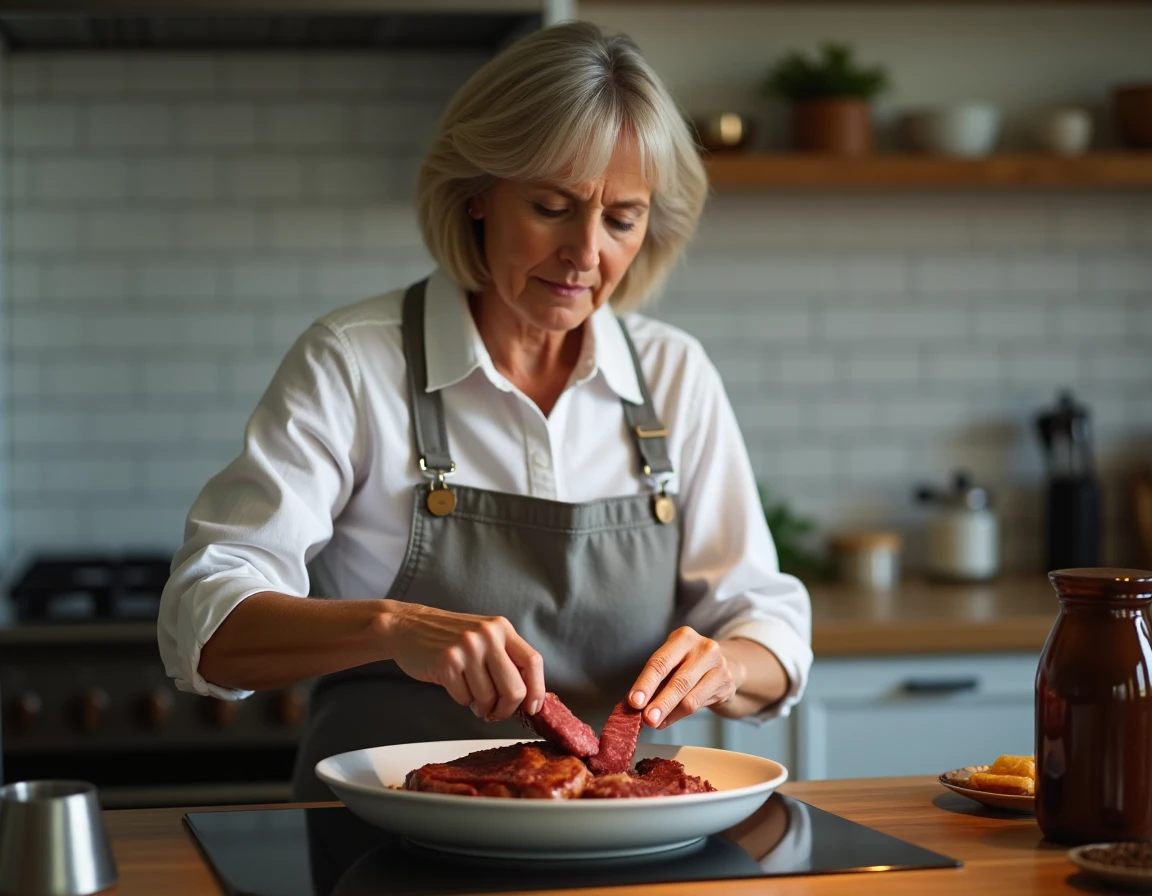
We take a leftover roast out of the fridge, microwave it for two minutes, and end up with a shoe sole. The problem doesn’t come from the meat: it comes from the speed at which we apply heat to it.
Cooked meat has lost some of its moisture during the first cooking. Reheating too quickly or too intensely accelerates the evaporation of the little remaining moisture. The whole logic of reheating revolves around a simple principle: raise the temperature of the core without causing a second cooking.
The role of fat as an anti-drying barrier
Before talking about the oven or frying pan, we often forget a decisive factor: what surrounds the meat at the time of reheating. A piece reheated naked, placed on a rack or in a dry dish, loses its moisture through direct evaporation. Adding a fat changes the game.
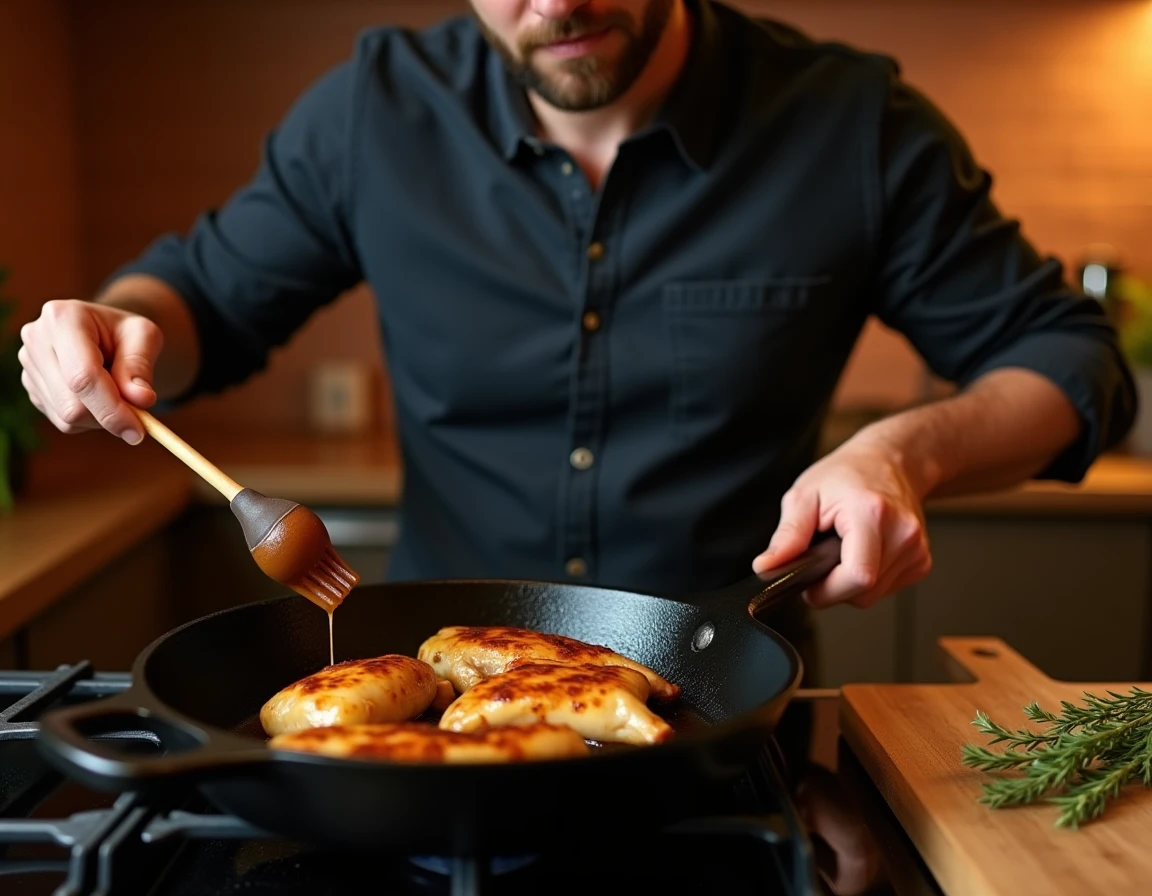
The case of duck confit illustrates this mechanism well. The confit fat preserved around the meat acts as a protective film. Reheating in a non-stick pan over medium heat, while keeping a thin layer of this fat, allows for melting meat and crispy skin in about ten minutes. The fat does not penetrate the meat; it insulates it from the dry heat of the pan.
This principle can be applied to other meats. A drizzle of olive oil or a knob of butter in the pan, with a lid on, creates a humid and fatty micro-environment that slows down evaporation. For already cooked chicken, this approach (fat, lid, medium-low heat) yields better results than microwaving.
You can also add a bit of broth for even more steam under the lid. The goal is to reheat already cooked meat with Double Portion in just a few minutes, just enough time for the core to be hot, without recooking the fibers.
Reheating meat in the oven without drying it out: temperature and humid environment
The oven remains the most consistent method for large cuts (roast, leg, shoulder). The classic trap: turning the thermostat up to over 180 °C to speed things up. At this temperature, the outside of the meat recooks while the center is still warm.
The right setup for reheating in the oven
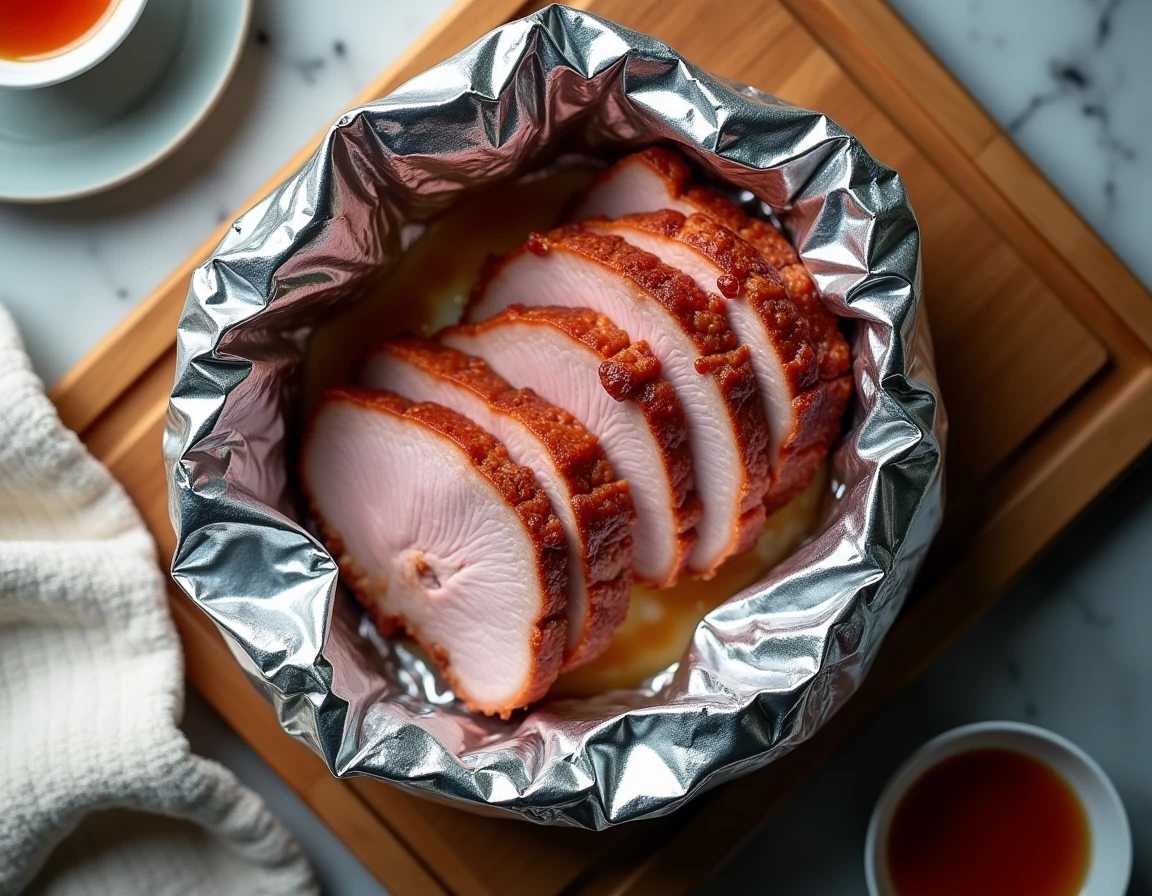
We aim for a low temperature, around 120 to 150 °C. The meat is placed in a dish with a base of aromatic liquid (cooking juices recovered the day before, broth, or even a simple base of water with herbs). The dish is covered with aluminum foil or a lid.
- The liquid generates steam under the lid, which keeps moisture around the meat instead of letting it escape into the dry oven environment.
- The low temperature allows time for the heat to penetrate to the core without creating a harsh gradient between the outside (dry and overcooked) and the inside (cold).
- Systematically adding an aromatic humid environment (broth, juice, sauce) transforms mediocre reheating into successful reheating, whether in the oven or slow cooker.
The time varies depending on the thickness of the piece. Rather than setting an arbitrary duration, we check the temperature by touch or, better yet, with a probe. The core should be hot without the surface starting to retract.
Air fryer and breaded meats: recovering crispiness without overcooking
The microwave makes breading soggy and the meat rubbery. The conventional oven works, but takes time for a simple cordon bleu or breaded cutlet. The air fryer provides an intermediate solution that online feedback increasingly confirms.
The principle: the high-speed circulation of hot air recreates surface crispiness without needing to submerge the meat in oil. For already cooked products, we work at moderate temperature (around 150-160 °C) for a few minutes. This approach limits overcooking of the core while restoring a satisfying texture to the coating.
The limits of the air fryer for reheating
For unbreaded meat (a leftover steak, for example), feedback varies on this point. Pulsed hot air tends to dry out unprotected surfaces faster than a traditional oven closed with liquid. The air fryer works well for coated meats, less so for bare pieces. For a steak, the pan with a bit of fat remains more suitable.
Microwave: how to limit damage to already cooked meat
We won’t pretend that the microwave gives excellent results on meat. It sometimes remains the only available option (office, quick fix). In this case, a few adjustments significantly reduce drying.
Reducing the power to 50% or less extends the heating time but distributes the energy more evenly. The meat receives less heat at once, allowing the center to warm up without the edges becoming fibrous.
Placing a lid or dome over the plate traps steam, just like the lid in a pan or the aluminum in the oven. Adding a tablespoon of water or broth to the bottom of the plate before starting the reheating creates an additional source of steam. We reheat in short intervals, stirring or flipping the meat between each cycle.
- Reduced power (50% max) to avoid hot spots.
- Lid or dome to retain moisture.
- Base of liquid (water, broth, juice) to generate steam.
- Short intervals with pauses between each cycle to homogenize the temperature.
Storage before reheating: what happens in the fridge
The quality of reheating also depends on what happened between cooking and the moment we turn the heat back on. Meat stored unprotected in the refrigerator loses moisture through slow evaporation. The cold, dry air of the fridge acts like a low-speed dehydrator.
Wrapping the meat tightly as soon as it has cooled (plastic wrap directly on it, closed container, vacuum bag) limits this loss. If we have recovered the cooking juices, storing them with the meat in the same container allows the fibers to reabsorb moisture at the time of reheating.
Successful reheating starts the day before, at the time of storing leftovers. Well-protected meat in the fridge, reheated slowly with a contribution of fat or liquid, retains a texture close to the initial cooking. No method can compensate for meat that has already dried out due to poor storage.