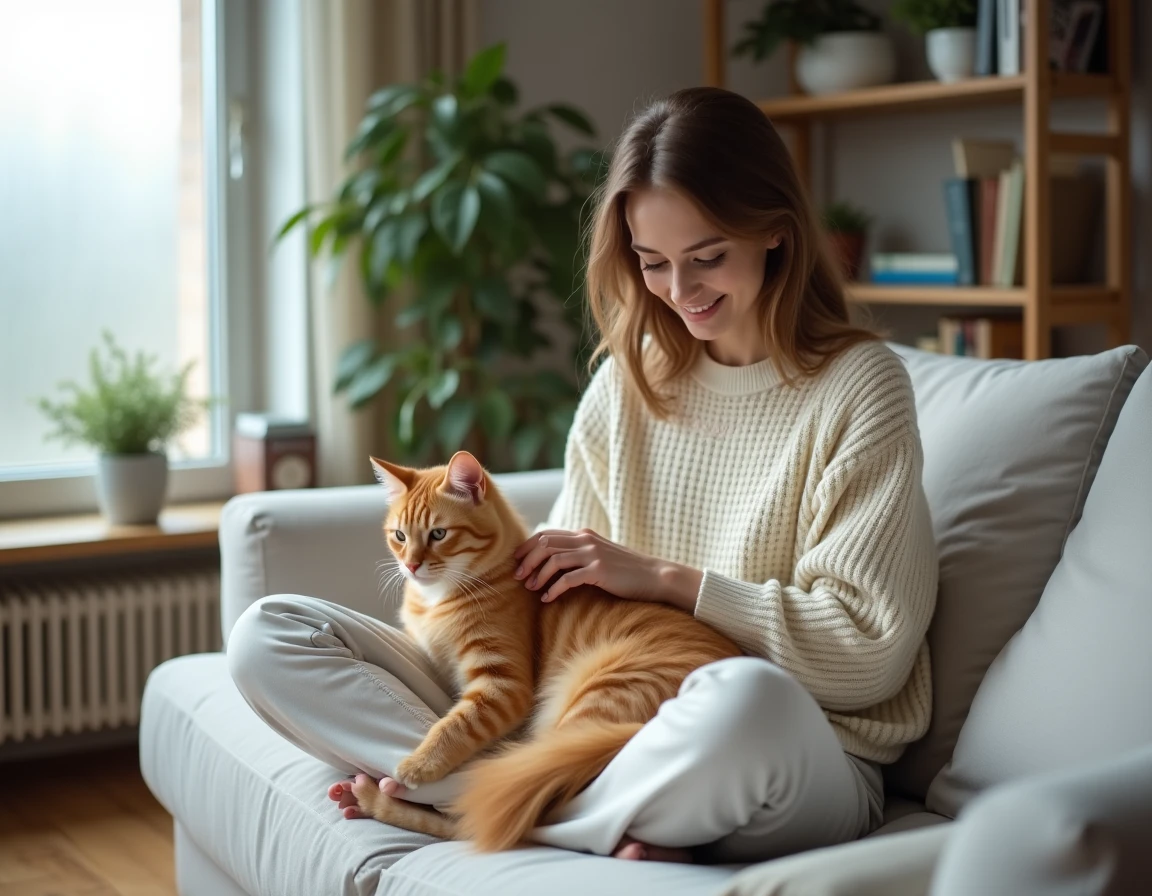
A cat meowing every morning in front of an empty bowl, another scratching the sofa while a scratching post is available two meters away: these everyday situations often reflect a gap between what we offer and what the cat actually needs. Taking good care of your cat daily relies less on accumulating accessories and more on understanding its fundamental needs, starting with its freedom of choice.
Stable routine and predictability: the true foundation of feline well-being
It is often thought that a happy cat is one that is constantly stimulated. Opinions vary on this point, but recent behavioral documentation points in a clear direction: the regularity of daily life reduces anxiety much more than the multiplication of new toys.
In practical terms, this means feeding at the same times, cleaning the litter box with the same frequency, and leaving the furniture in place. A cat identifies its routes, observation posts, and resting areas. Moving a cat tree or rearranging the living room can be enough to disturb a sensitive animal for several days.
To delve deeper into the specific needs of felines according to their age or lifestyle, you can consult La Maison des Animaux for cats and find concrete guidelines on nutrition, health, or layout.
The other pillar, less obvious, is the control that the cat exerts over its environment. Being able to choose where to sleep, when to interact with us, and where to isolate itself when it has had enough: this freedom of choice is not a luxury, it is a basic condition. A cat forced to stay on laps or woken up to play accumulates stress without us noticing.
Litter box, kibble, and claws: common daily mistakes
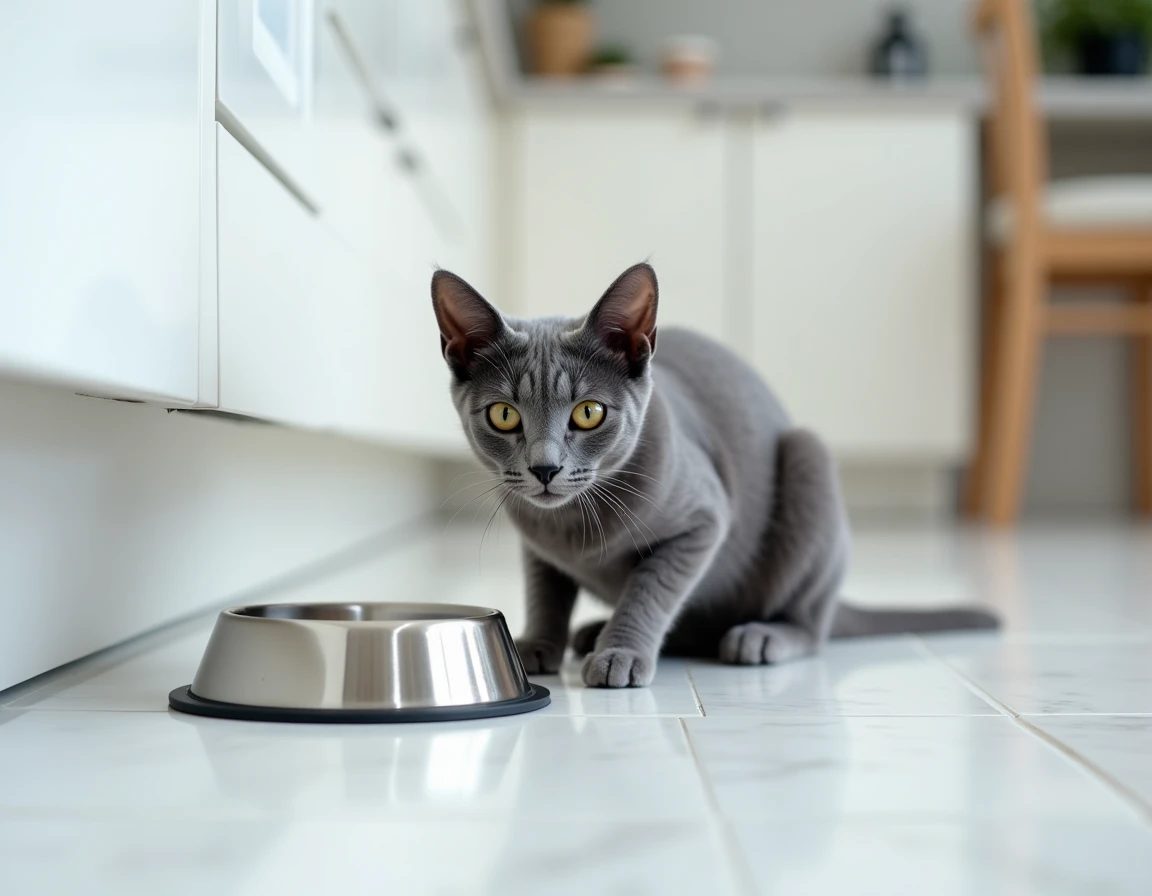
The litter box is probably the most underestimated aspect. A box that is too small, poorly placed, or cleaned irregularly causes the cat to hold back or eliminate elsewhere. The effective rule of thumb: one box per cat, plus one extra, each in a quiet and permanently accessible location.
Nutrition: adapting kibble to age and size
A growing kitten has different needs than a neutered adult cat. Kitten kibble is richer in protein and fat, which can lead to rapid weight gain in a cat over twelve months old. Checking for the “neutered” or “adult” label on the package helps avoid overweight, the leading cause of joint and urinary issues in indoor cats.
The water bowl deserves equal attention. Some cats drink very little if the water stagnates in a plastic bowl. Offering a fountain or simply changing the water twice a day can radically change their hydration.
Claws: trim or let them be
A vertical sisal scratching post placed next to the area the cat already scratches resolves most furniture issues. Trimming claws is not always necessary for a cat that goes outside or actively uses its scratching posts. For a sedentary indoor cat, a trim every few weeks with an appropriate claw clipper is sufficient, cutting only the translucent tip.
- Place the scratching post near the main resting spot (the cat stretches and scratches upon waking)
- Avoid unstable scratching posts that would tip under pressure; the cat won’t use them twice
- Provide both a vertical surface and a horizontal surface to cover both possible preferences
Monitoring the cat’s emotional well-being without a vet
Even before consulting, one can detect discomfort by observing four simple indicators daily: appetite, frequency of spontaneous play, body language (ears, tail, posture), and social interactions. A cat that stops playing or suddenly isolates itself sends a signal that we tend to confuse with calm.
A cat in good emotional health alternates between active phases and resting phases, eats regularly, and approaches household members spontaneously, even briefly. If any of these behaviors change for more than two days, a visit to the vet is necessary to rule out pain or an underlying illness.
Cat alone at home: maximum duration and arrangements
An adult cat handles solitude better than a dog, but beyond twenty-four hours without human contact, the risk increases: dirty water, saturated litter, lack of visual control over its condition. Even an independent cat needs someone to check in at least once a day to refresh the water, check the food, and ensure there are no signs of distress.
For absences of a few hours during the day, a few arrangements can make a difference:
- Leave access to a secure window for visual stimulation (birds, passersby, movement)
- Provide two or three rotating toys that are alternated each week to maintain curiosity
- Ensure a high place (shelf, cleared top of a cabinet) where the cat feels safe
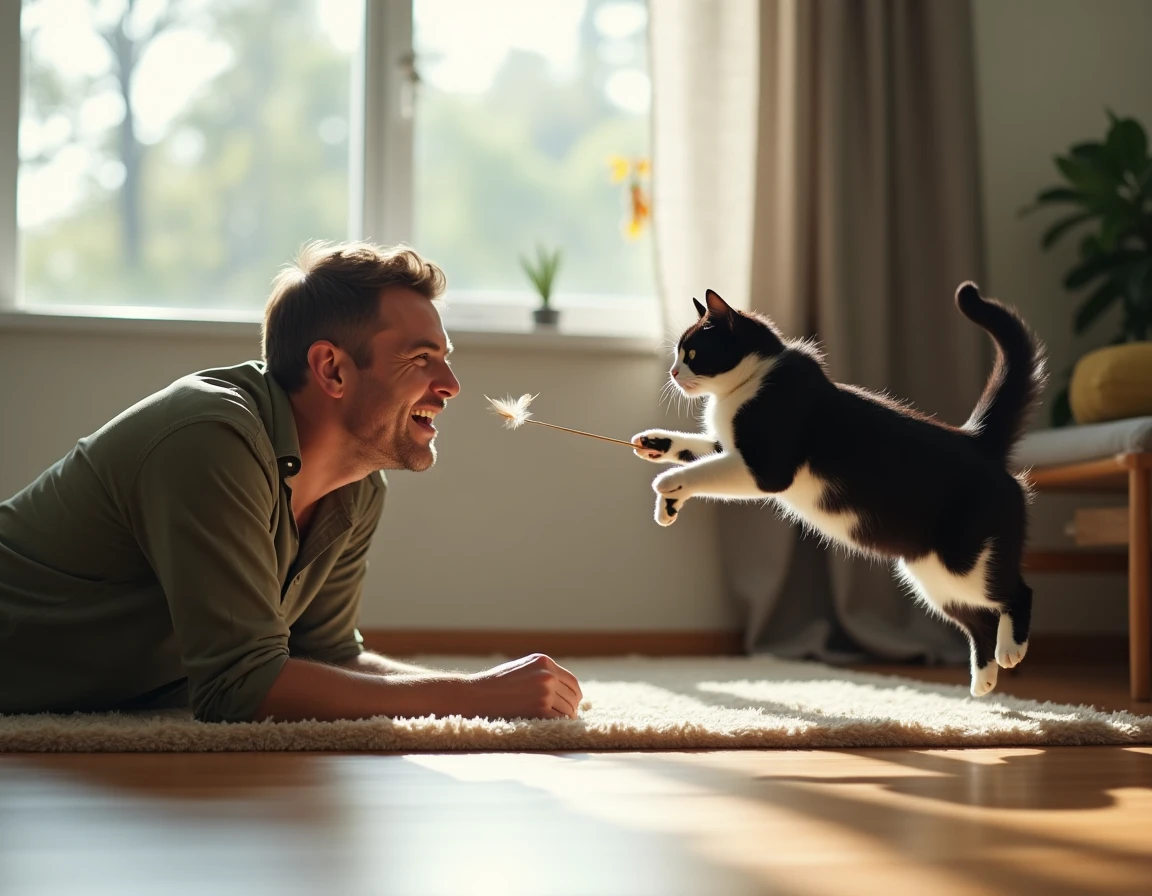
The classic mistake is to compensate for a long absence with an intense play session upon return. The cat prefers micro-sessions of a few minutes spread throughout the evening rather than a marathon that overstimulates it before bedtime.
Ultimately, taking good care of your cat daily relies on a few things, provided they are done consistently. A clean litter box, appropriate kibble, fresh water, a stable scratching post, and above all, respecting its rhythm and choices cover most of what a cat needs to stay healthy and happy in its home.