
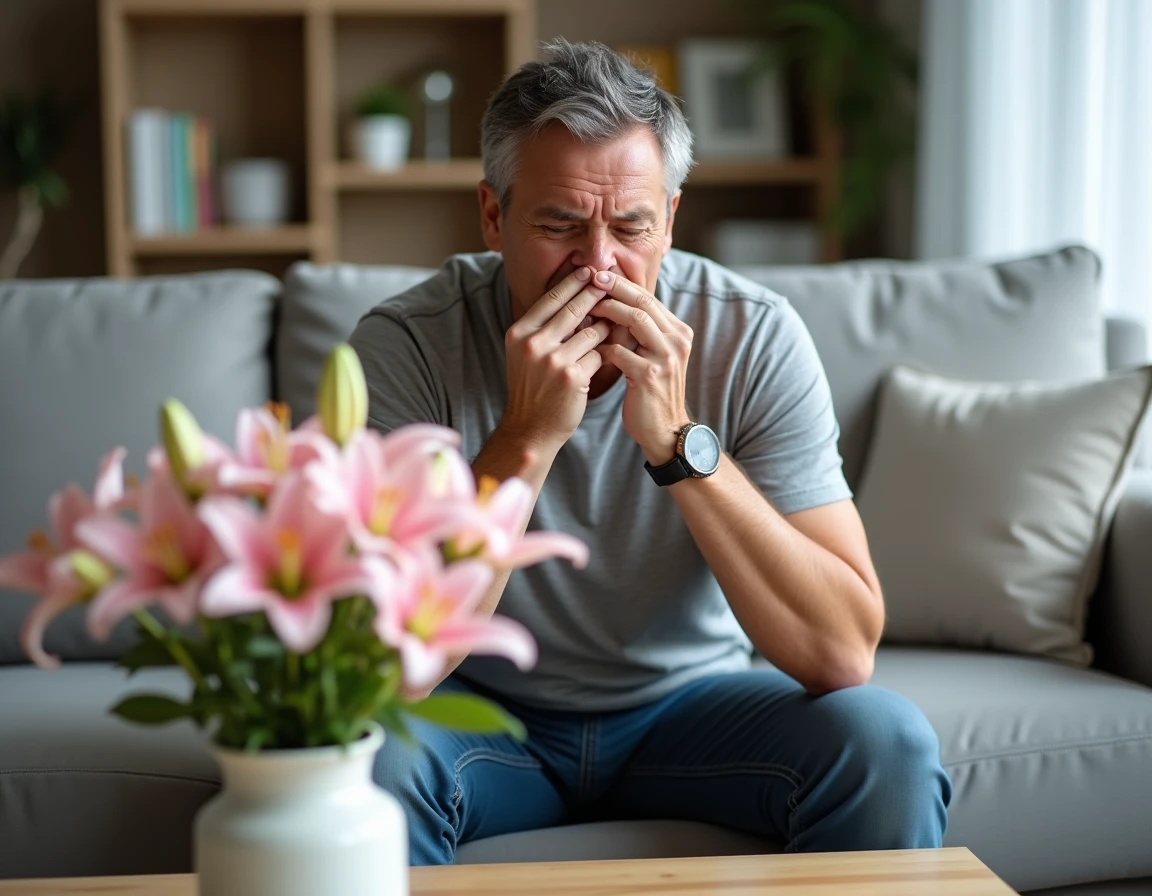
A bouquet of oriental lilies placed on the living room table, and in less than an hour, the room is filled with their fragrance. For most people, this is pleasant. For others, it marks the beginning of a migraine, respiratory discomfort, or eye irritation. The toxicity of lilies is often associated with our pets, but the question also arises for us: can this powerful smell harm our health?
Volatile Compounds of the Lily and Indoor Air Quality
The characteristic scent of the lily comes from biogenic volatile organic compounds (BVOC) emitted by the flower. Among them are linalool and certain benzyl derivatives, molecules found in many fragrant flowers.
The issue does not stem from toxicity in the classical sense. It is more about an accumulation of these BVOC in an enclosed space. Indoor air quality measurements conducted in green offices show that a high concentration of strongly scented flowers, including lilies, can temporarily elevate BVOC levels in the air. This phenomenon increases the reported frequency of irritation symptoms: itchy eyes, dry throat, slight cough.
Specifically, a single lily in a large, well-ventilated living room poses no measurable concern. Three stems of oriental lilies in a 12 m² bedroom with closed windows is another story. As detailed in the toxic smell of lilies according to Domotica, the configuration of the room and air renewal play a crucial role.

Chemical Hypersensitivity: Who is Really at Risk from the Scent of Lilies
A 2021 review published by the University of Melbourne on scented consumer products confirms a point often misunderstood. The odor compounds present in highly fragrant flowers (including lilies) can trigger migraines, asthma attacks, or feelings of discomfort in sensitive individuals, even at very low concentrations, without demonstrated systemic toxicity.
We are therefore in the realm of intolerance and chemical hypersensitivity, not poisoning. This distinction matters, as it changes the response that needs to be provided.
Most Exposed Profiles
- Asthmatic individuals, for whom intense floral scents are a recognized trigger for bronchospasm, even without direct contact with the plant
- People suffering from chronic migraines, for whom high concentrations of linalool can initiate an attack within minutes in a confined space
- Individuals with multiple chemical sensitivity (MCS), a syndrome where low doses of volatile compounds cause disproportionate symptoms
For someone without specific allergic or respiratory issues, the scent of lilies poses no proven health risk. Feedback on this point varies, with some people reporting occasional headaches without known history, but clinical data do not show systemic risk.
Concrete Recommendations from Allergists for Shared Spaces
Recommendations from several allergy societies, including the European Academy of Allergy and Clinical Immunology, go beyond simple cautionary advice. These bodies now recommend avoiding highly fragrant bouquets (including oriental lilies) in hospital rooms, nursing homes, and waiting areas.
The logic is pragmatic. In these places, the proportion of vulnerable individuals (asthmatics, patients undergoing treatment, elderly individuals with reduced respiratory function) is high. Air renewal is often insufficient.
Measures to Apply at Home
When applied to the home, the reasoning remains the same. We are not talking about banning lilies, but about adapting their placement.
- Do not place lilies in a bedroom, especially if sleeping with the windows closed. Prolonged exposure during sleep maximizes contact with BVOC
- Favor ventilated rooms or open spaces (living room with a slightly open window, veranda, covered terrace)
- Remove the stamens as soon as the flower opens. Lily pollen is an additional irritant, and this handling also reduces stains on textiles
- In the presence of a cat, completely remove the lily from the home: for felines, all parts of the plant are potentially deadly, including simply licking the pollen
Lily Toxicity for Animals: A Game-Changing Reminder
We cannot talk about lilies indoors without addressing animal toxicity, as this is often how the question of danger arises in households. Lilium and Hemerocallis cause acute renal failure in cats, often fatal. Ingesting a single leaf or simply licking the pollen can be enough.
Symptoms typically appear within 3 to 12 hours following ingestion: lethargy, hypersalivation, vomiting, diarrhea, followed by rapid renal deterioration in the following days. Consulting a veterinarian urgently remains the only appropriate response in case of suspected ingestion.
Dogs are less sensitive, but digestive issues have been documented. For any household with a pet, the question of odor becomes secondary to the risk of poisoning through contact or ingestion.
The lily remains a beautiful flower. Its presence indoors simply requires knowing your audience: a well-ventilated room, no closed bedroom, no cat nearby. The respiratory discomfort related to the scent of lilies is not toxicity in the strict sense, but for sensitive individuals, it deserves to be taken seriously, just like a common household allergen.