An 800cc adventure bike bought for a twelve-kilometre daily commute through the city often ends up being sold within a year. The problem isn’t the bike—it’s the gap between what you imagine riding and what you actually ride. Choosing a motorcycle that suits your riding style and budget starts with a simple question: what kind of journey, how often, and on what roads?
First-year total cost: what the purchase price doesn’t tell you
You look at the asking price, negotiate a few hundred euros off, and forget about everything else. Yet the purchase price accounts for less than half the actual cost of ownership over twelve months. Insurance, routine maintenance, tyres and, now, the roadworthiness test all add up to a separate budget that can exceed your monthly payments.
Since 15 April 2024, motorcycles and scooters have been subject to periodic roadworthiness testing. For a vehicle registered in 2020 or 2021, the first test must be carried out in 2026, no later than four months after the anniversary of its first registration and before 31 December. So if you’re buying a recent used bike, this cost needs to be factored into your purchase timeline and could delay or increase the cost of the transaction.
Insurance premiums are rising even as the number of insured vehicles falls. You can browse used-bike listings at https://www.mooteur.fr to find a specific model, but get an insurance quote for that model before signing. A middleweight naked bike and a sports bike with the same purchase price can differ by several hundred euros a year in insurance premiums.
Claim costs often matter more than how frequently incidents occur. When comparing two motorcycles, the cost of parts and how easy they are to repair matter just as much as the likelihood of an incident. Recycled parts, when available, can significantly reduce the cost of repairs. When getting a repair estimate, ask the garage whether this is an option—it could make a difference to the final bill.
Riding style and motorcycle type: start with your actual journeys
Before looking at categories (naked, adventure, sport, cruiser), list the journeys you make in a typical month. Work out the percentage spent in town, on main roads, motorways and trails. Your answer points you towards the right type of bike, regardless of your aesthetic preferences.
- Short urban journeys (under 20 km a day): a lightweight naked bike or an automatic scooter offers easy handling and an upright riding position, without straining your shoulders or back.
- A mix of city and road riding, with weekend trips: a road-focused adventure bike or a middleweight naked bike can handle both without major compromises on comfort or weight.
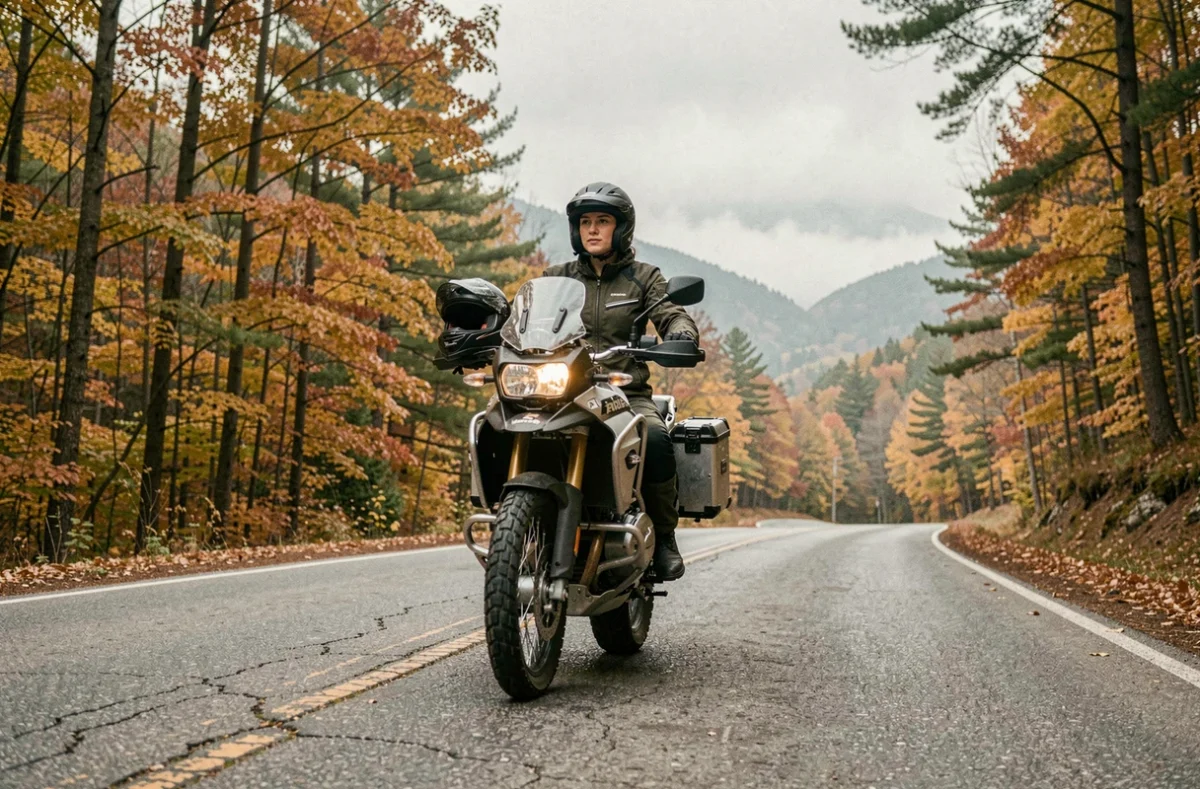
- Regular long-distance journeys (motorways, touring): a touring bike or large adventure bike with wind protection, a wide seat and a generous fuel tank helps reduce fatigue over several hundred kilometres.
- Sporty riding on winding roads or on track: a sports bike with a forward-leaning riding position and firm suspension fits the bill, but can become uncomfortable for everyday city use.
Your riding position determines how comfortable you’ll be over time. An upright position suits most mixed riding, while a forward-leaning position makes sense only if sporty riding is your main use.
Weight and seat height: two often-overlooked factors
A large adventure bike with an 850 mm seat height may suit a rider who’s 1.80 m tall, but make low-speed manoeuvres difficult for someone shorter. Wet weight affects how tiring the bike is to handle in town: above 220 kg, U-turns and parking become physically demanding.
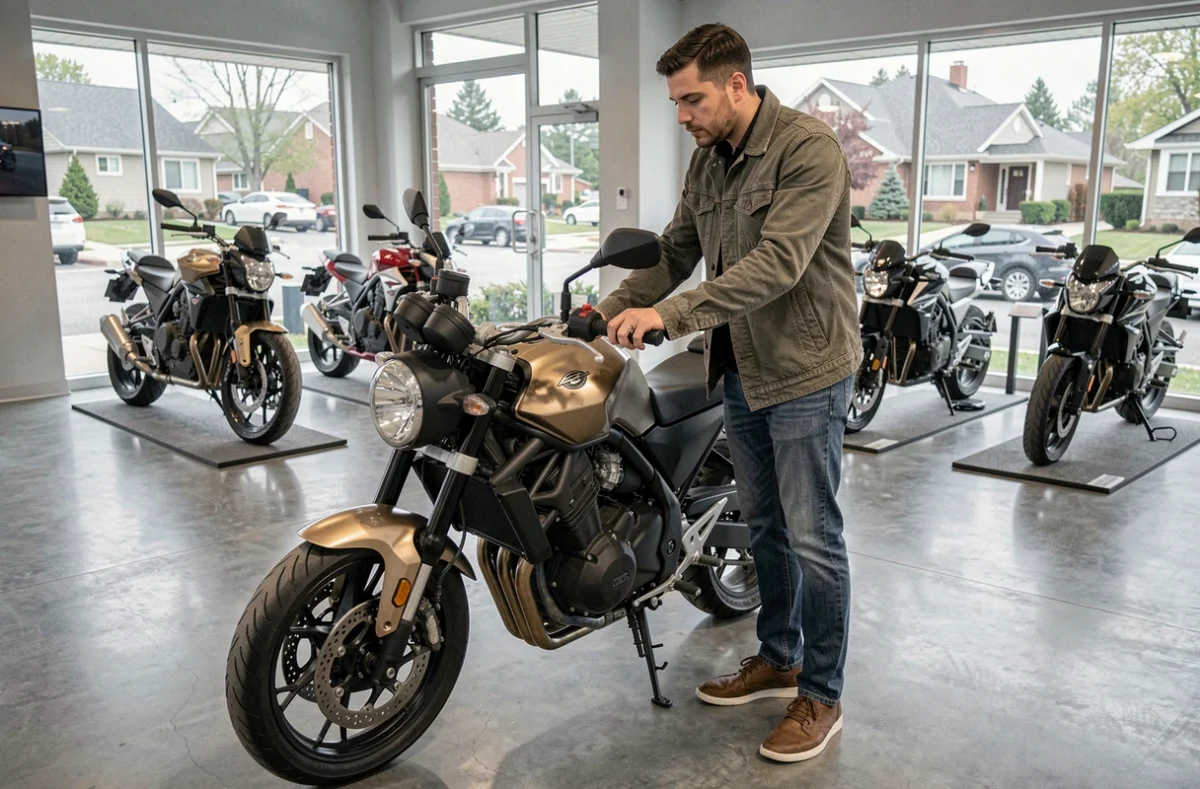
It’s not enough to try the bike while it’s stationary. Check that you can put both feet on the ground, lift it easily and reach the controls without stretching your arms.
Engine size and motorcycle licence: match the power to your experience
The A2 licence, available from age 18, limits power to 35 kW (47.5 hp). After two years with an A2 licence and additional training, you can obtain an unrestricted A licence. Starting out on an A2-restricted bike is still a sensible choice, even when it isn’t legally required, if you don’t have much riding experience.
Engine size alone doesn’t tell you what a motorcycle is like to ride. A 650cc twin can be smoother and easier to handle than a 600cc four-cylinder whose power comes in high up the rev range. For road riding, an engine with plenty of torque at low revs reduces fatigue and the need to change gears in town.
New or used: weigh up the overall budget
A new motorcycle comes with a manufacturer’s warranty and predictable maintenance costs. Choosing a well-maintained used bike leaves more money for gear (helmet, gloves, jacket, boots), an essential expense that can run to several hundred euros.
When buying used, check the service history, the condition of the tyres, chain and brake pads, and now the roadworthiness test certificate or its expiry date. If the roadworthiness test is due within a few months of purchase, negotiate the price accordingly.
A realistic motorcycle budget: costs to calculate before you buy
Before setting a maximum price for the bike itself, subtract the fixed costs for the first year from your total budget.
- Annual insurance: varies according to the model, the rider’s age, location and level of cover. Get at least three quotes for the exact model you’re considering.
- Riding gear: an approved helmet, certified gloves, a jacket with back and elbow protection, reinforced trousers and full-height boots. This alone can take up a significant part of your initial budget.
- Routine maintenance: oil changes, filters, chain and tyres over the first twelve months. Service intervals vary by manufacturer, from a few thousand to more than ten thousand kilometres.
- Roadworthiness test (used bikes): factor it in if the test is due during the year you buy the bike.
What’s left after these costs have been deducted is your true price limit for the motorcycle. Buying a model at the top of your budget without setting aside money for gear and insurance means riding on borrowed money, literally and figuratively.
Choosing the right motorcycle comes down to a practical exercise: list your journeys, set an overall budget that includes every cost, try the bike for yourself, and get an insurance quote before signing the order form. This often-overlooked step can save you from an unpleasant surprise in January.