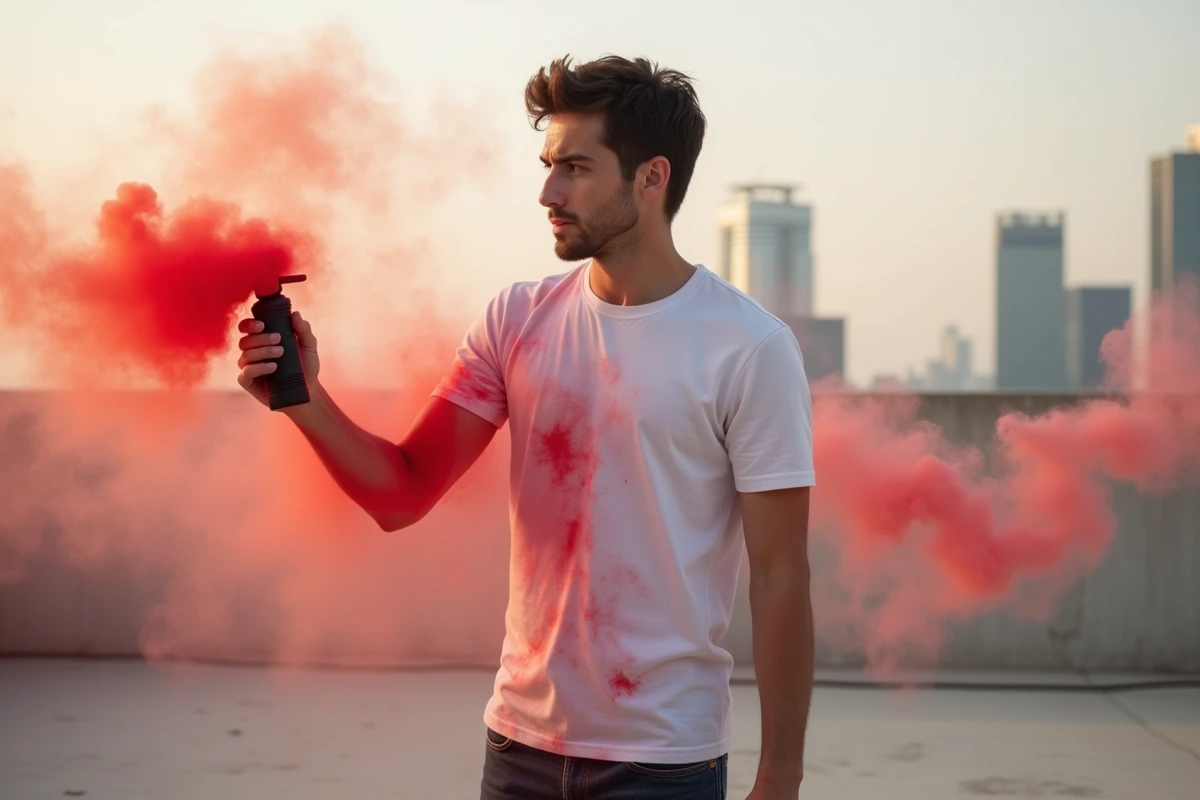
Smoke bombs stain. Not all of them, not in the same way, and not on all surfaces, but the risk exists with every use. The chemical composition of the pyrotechnic mixture, the type of dye, and the porosity of the exposed surface determine the severity of the residual deposit. Here, we detail the mechanisms of stain formation, the formulations to favor, and the protection protocols suitable for each context.
Chemical composition of smoke bombs and residue formation
A smoke bomb produces its smoke by burning a solid mixture that combines an oxidizer (often nitrate-based), a fuel, a binder, and, for colored models, one or more organic dyes. It is this last component that poses a problem.
Organic dyes sublimate under heat and recondense upon contact with cooler surfaces. On a porous textile (cotton, linen, silk), dye molecules penetrate the fibers within seconds. On a matte painted surface or stucco, the pigment clings to the micro-roughness of the coating.
According to the 2025 annual report from the French Federation of Pest Control-Disinsection-Disinfection (FFDDD), colored smoke bombs systematically cause permanent stains on porous painted surfaces. White formulations, on the other hand, leave residues that can mostly be washed away with soapy water. This distinction between colored and white smoke bombs is the first criterion for limiting the risk. For more information about Bargemon, the topic is addressed from a practical perspective.
Colored smoke bombs vs. white smoke bombs: what is the risk of stains
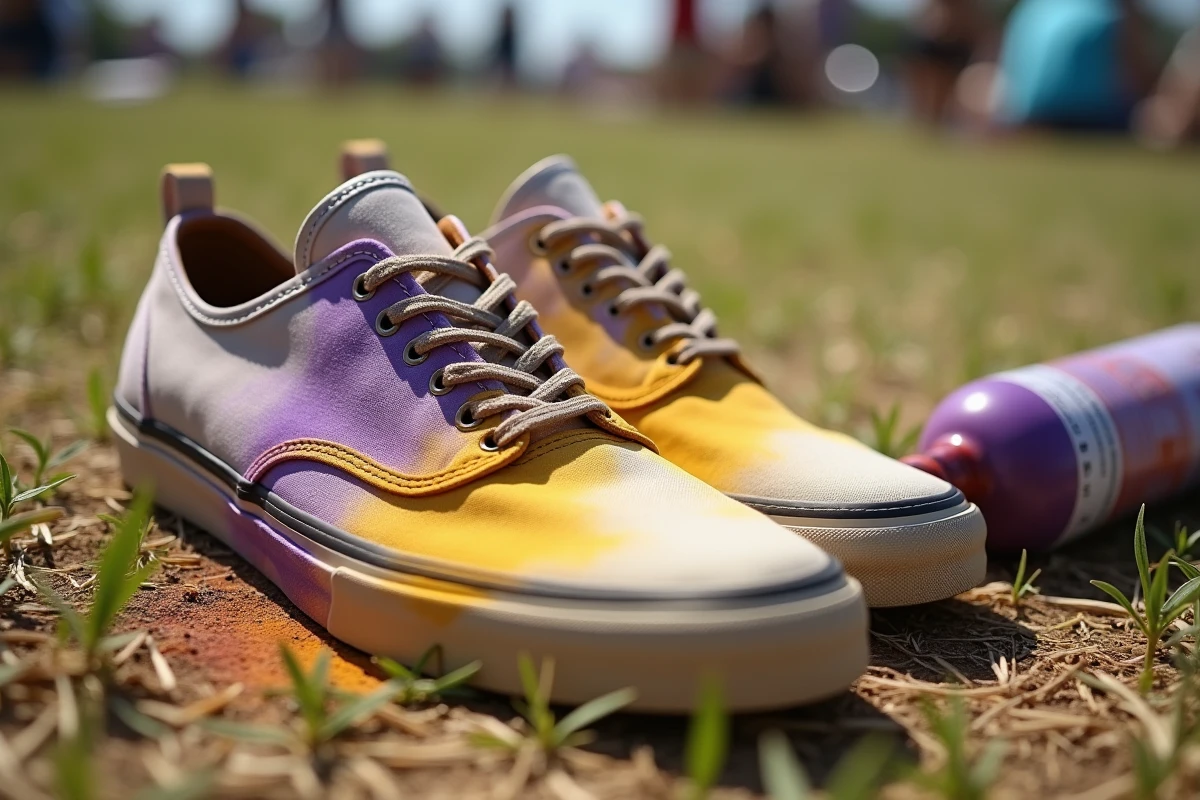
The color is not just aesthetic; it radically changes the behavior of the residue. A red, blue, or green smoke bomb contains azoic or anthraquinone dyes whose tinting power is designed to saturate the surrounding air. When this dense smoke settles, it acts like an improvised dye.
A white smoke bomb does not contain any tinting dye. Its smoke is based on mineral particles or chlorates that produce a clear aerosol. The deposit remains superficial and can be cleaned with water on most non-porous surfaces.
In practice, we observe that colored smoke bombs intended for festive events (weddings, gender reveals, photo shoots) are the primary culprits of irreversible stains on clothing and facades. White smoke bombs used for disinsection present a different problem: that of oily residues related to the insecticide, not the dye.
Specific case of insecticide smoke bombs
Bed bug or insect smoke bombs contain an active ingredient (often permethrin or cypermethrin) dispersed in an oily vehicle. This vehicle leaves a greasy film on surfaces, particularly upholstery and countertops.
The ban in 2025 on smoke bombs containing cypermethrin in collective housing is partly explained by their tendency to create indelible oily stains on textiles, in addition to their poor penetration into cracks. This greasy residue attracts dust and yellows over time, making cleaning increasingly difficult if not addressed promptly.
At-risk surfaces and protection protocol before use
Not all surfaces react the same way. We recommend evaluating the surface before activating any smoke bomb, whether festive or insecticidal.
- Porous textiles (cotton, linen, carpet): maximum risk. Always remove or cover with a waterproof plastic tarp, including curtains and cushions
- Matte paints and stucco: the pigment embeds in micro-cavities. Protect with a polyethylene film secured with masking tape
- Smooth non-porous surfaces (tiles, glass, stainless steel): superficial residue, cleanable with soapy water within an hour following exposure
- Raw or waxed wood: rapid absorption of the dye through the wood pores, nearly irreversible stain without sanding
For outdoor use (photo shoot, sports event), the wind disperses the smoke but also projects colored particles over a much wider area than expected. We regularly observe stains on parked vehicles or facades located several meters from the activation point.

Post-exposure cleaning: act quickly
Time is a crucial factor. On a textile, a smoke bomb dye fixed for more than an hour resists most household stain removers. Here is the sequence to follow.
- Immediately rinse the affected area with cold water (hot water sets some azoic dyes)
- Apply a stain remover based on sodium percarbonate, let it act for about ten minutes, then wash in the machine on the hottest cycle tolerated by the fabric
- On hard surfaces, use household alcohol or acetone (test first on an inconspicuous area to avoid damaging the coating)
- On raw wood, lightly sand with fine grain and then reapply the original finish
Never rub a colored smoke deposit dry: this spreads the pigment and pushes it into the fibers or pores of the material.
Stain-free alternatives: dry ice and low-residue smoke bombs
Since mid-2025, dry ice smoke bombs have emerged as a stain-free alternative. The principle relies on the sublimation of solid CO2, which produces a dense white fog without any dye or oily vehicle. No tinting deposit forms on exposed surfaces.
In disinsection, this cryogenic technology offers an additional advantage: freezing destroys bed bug eggs, where traditional chemical smoke bombs struggle to penetrate crevices. INRAE has documented this effectiveness in its technical bulletin dedicated to cryogenic methods applied to pest control.
The constraint remains the equipment: handling dry ice requires professional gear (cryogenic gloves, appropriate ventilation) to avoid cold burns. It is not a public solution for now, but it is becoming more common in the professional pest control sector.
The choice of smoke bomb determines the risk of stains far more than the cleaning method afterward. Favor a white formulation or a cryogenic alternative, protect porous surfaces before activation, and intervene within minutes following accidental contact: these three reflexes cover almost all problematic situations.