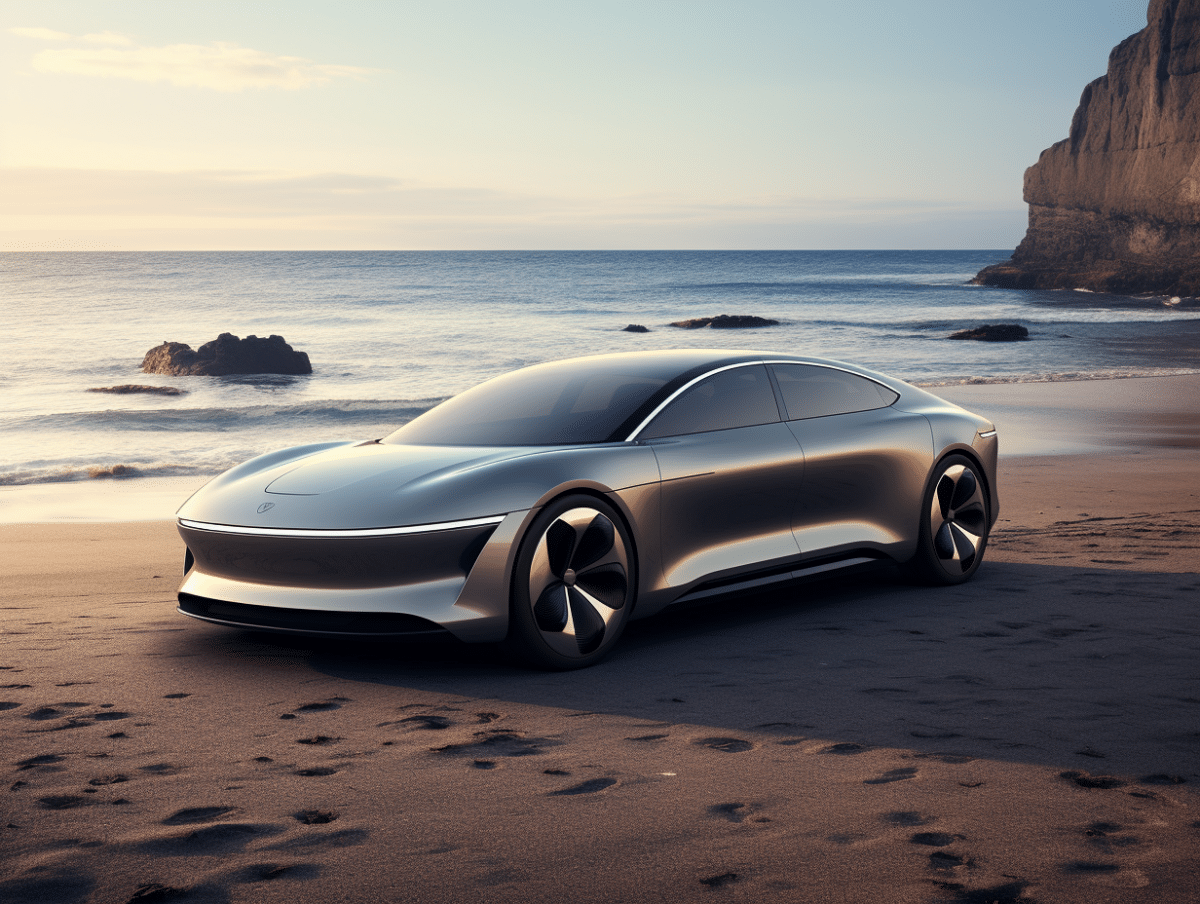
The world of automobiles is constantly reinventing itself, driven by technological innovations and increasing environmental demands. Designers and engineers are working to shape the cars of tomorrow, which promise to transform our relationship with mobility. Between the integration of sustainable materials, the adoption of electric drivetrains, and advanced autonomous features, current trends outline a future where design and technology intertwine to offer unprecedented driving experiences. These evolutions are accompanied by a redefinition of automotive aesthetics, where aerodynamic efficiency and stylistic innovation go hand in hand.
The New Frontiers of Automotive Design: Between Aesthetics and Functionality
The future automotive design stands at the crossroads of formal beauty and technical necessity. The reflection on the aesthetics and functionality of vehicles takes on a new dimension with the adoption of trends such as minimalism. This trend, far from being a mere fashion statement, responds to a quest for clarity and efficiency, where every line and surface is designed to optimize the driving experience and energy performance. Contemporary automotive design thus favors purity and simplicity, traits that reflect an increasing sophistication and a search for harmony with technological innovations.
The use of eco-friendly materials in automotive construction is now an undeniable fact. Manufacturers, aware of their role in environmental preservation, seek to reduce their ecological footprint by integrating sustainable materials such as expanded polypropylene (EPP). These materials, chosen for their lightness and recyclability, contribute to the development of more environmentally friendly vehicles without compromising passenger safety or comfort.
Muchos are the challenges facing the automotive industry in terms of design. The electrification of vehicles greatly influences the lines and shapes of new creations. The need to integrate bulky batteries while maintaining the aerodynamics of cars pushes designers to innovate continuously. Similarly, connectivity becomes a key element of interior design, with dashboards transformed into true digital command centers. Consider this integration as a reflection of our era, where the interaction between humans and machines becomes increasingly intuitive and immersive.

The Technological Revolution in Automobiles: Connectivity, Autonomy, and Sustainability
Connectivity in vehicles is no longer an option but a requirement of the digital age. Incorporating increasingly advanced technologies, the automobile is transforming into a connected space, offering infotainment features and remote services. Embedded systems now allow for smooth and secure interaction between the driver, the vehicle, and the external environment. Considering the rise of artificial intelligence and the Internet of Things, vehicle manufacturers are shaping a user experience where the car becomes a personal assistant on wheels.
On the other hand, autonomy of vehicles is progressing rapidly, promising to redefine mobility as we know it. Advances in autonomous driving systems, ranging from sensors to algorithmic decision-making, herald a future reduction in accidents caused by human error and an optimization of traffic. The race for complete automation is underway, and with it, the emergence of new legal and ethical issues that the automotive sector must already address.
The notion of environmental sustainability is now at the heart of industrial concerns. The transition to vehicle electrification, symbolized by the increasing adoption of electric energy as an alternative to fossil fuels, reflects this ecological imperative. The industry, including major players in the European automotive ecosystem, is resolutely moving towards innovative solutions such as the use of expanded polypropylene (EPP), thereby reducing carbon footprints and favoring a sustainable development approach.